

Term insurance is one of the crucial financial decisions for your family’s future Most of the public acknowledges that life insurance is important but few know one crucial answer how much term insurance coverage do I actually need?
If you are going for a low coverage then your family can be financially burdened and
if you choose a ridiculously high whole life amount then the premium will be too much to pay
The Term Insurance Coverage should ideally be sufficient to enable your family to continue leading their life
that they had planned for further expenses like liabilities & future goal
events considering no earlier man is there.
The guide covers what exactly you need to know to estimate the right amount of Term insurance coverage for your lifestyle
and a straight forward approach that will put you in a better position when choosing this type of policy.
Why Choosing the Right Term Insurance Coverage Matters
Financial Protection for Your Loved Ones
The whole purpose of term insurance is to provide a safety net for your family
If the policyholder dies during the tenure of coverage The nominee receives the sum assured (as per terms and conditions)
How Adequate Term Insurance Coverage Can Help Your Family:
- Manage everyday living expenses.
- Repay outstanding loans.
- Fund children’s education.
- Meet future financial goals.
- Maintain their standard of living.
- Reduce financial uncertainty during difficult times.
A significant aspect of long-term financial planning is selecting an adequate level of coverage
Step 1: Calculate Your Annual Household Expenses
Estimate Your Family’s Financial Needs
First calculate how much your family spends each year on core expenses like
- household expenses.
- Children’s education.
- Utility bills.
- Medical expenses.
- Transportation.
- Insurance premiums.
- Other regular financial commitments.
This gives you a rough idea of how much money your family will need.
Step 2: Add Outstanding Liabilities
Include Existing Loans
In this regard, your life insurance should account for pending financial commitments on your part as well, such as:
- Home loan.
- Car loan.
- Personal loan.
- Education loan.
- Business loan.
The inclusion of these liabilities makes sure that your family is not wearing the burden of debt
Step 3: Consider Future Financial Goals
Plan Beyond Today’s Expenses
Examples of your family’s future financial goals:
- Higher education for children.
- Marriage expenses.
- Retirement planning for your spouse.
- Long-term healthcare needs.
Estimating these future costs can give you a more accurate number to insure for
Step 4: Deduct Existing Assets and Savings
Account for Available Resources
When evaluating your Term Insurance Coverage, you ought to also consider other financial resources already available to your family
- Savings accounts.
- Fixed deposits.
- Investments.
- Mutual funds.
- Existing life insurance policies.
Use these assets to decrease the gap before you need extra cover.
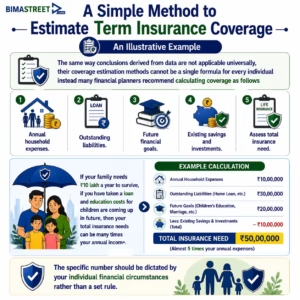
A Simple Method to Estimate Term Insurance Coverage
An Illustrative Example
The same way conclusions derived from data are not applicable universally
their coverage estimation methods cannot be a single formula for every individual instead many financial planners recommend calculating coverage as follows
- Annual household expenses.
- Outstanding liabilities.
- Future financial goals.
- Existing savings and investments.
If your family needs ₹10 lakh a year to survive if you have taken a loan and education costs for children are coming up in future
then your total insurance needs can be many times your annual income
The specific number should be dictated by your individual financial circumstances rather than a set rule
Factors That Influence Your Coverage Requirement
Everyone’s Needs Are Different
There are a number of factors that influence how much Term Insurance Coverage you have to buy, such as:
- Age.
- Income.
- Number of dependents.
- Lifestyle.
- Existing loans.
- Current savings.
- Long-term financial responsibilities.
Checking in on these factors from time to time is important for keeping your coverage sufficient.
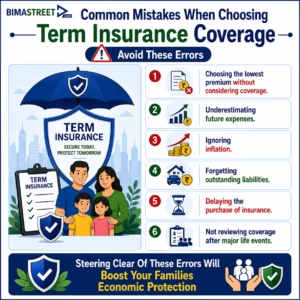
Common Mistakes When Choosing Term Insurance Coverage
Avoid These Errors
Mistakes are very prevalent and many of us have:
- Choosing the lowest premium without considering coverage.
- Underestimating future expenses.
- Ignoring inflation.
- Forgetting outstanding liabilities.
- Delaying the purchase of insurance.
- Not reviewing coverage after major life events.
Steering Clear Of These Errors Will Boost Your Families Economic Protection
Tips for Choosing the Right Term Insurance Plan
Make an Informed Decision
Before purchasing a policy:
- Compare multiple plans.
- Understand policy exclusions.
- Check claim settlement performance.
- Read the policy terms carefully.
- Choose an adequate policy term.
- Review optional riders if they suit your needs.
Choosing the appropriate plan is as important as selecting the appropriate coverage amount
Frequently Asked Questions
How much term insurance coverage should I buy?
There is no one-size-fits-all answer. The type of coverage you require is predicated on your income, finances
the loans in process that you carry and intended next steps for yourself or your dependents associated with current assets that you have
Is higher term insurance coverage always better?
Not necessarily. The idea is to select enough coverage that will cater to your family’s financial needs, however, not excessive protection
Should I review my coverage later?
Yes. You should also consider getting a new review of your coverage if you have experienced huge life changes, like marriage,
the birth of a child, buying a home or new financial responsibilities
Conclusion
Term Insurance Coverage is one of those financial decisions that you are gonna take for your dear ones. Instead of using a fixed amount or rough guide
assess what your family costs to live without the policy any debts or liabilities they would need to clear from their goals for the future
Term insurance secured with proper planning can offer your family financial stability and security, not with standing the fact that you are not around.
By reviewing your coverage periodically as your responsibilities change, you can ensure that you will be able to continue protecting your family in a way that meets their needs
At BimaStreet, we believe informed decisions lead to better protection. Understanding your options today can help you secure a healthier and more financially confident tomorrow